
"low retention"
200 article(s) found
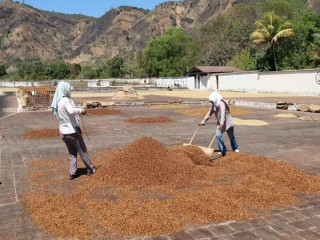
Coffee and bean honey treatment | Origin of honey treatment and half-sun treatment _ history story of honey treatment
The honey treatment in the traditional treatment appears only after the sun and water washing. The earliest regions to use honey treatment are Costa Rica, El Salvador and other Central and South American countries. Its invention is inspired by the Brazilian half-sun method (peeling and sunbathing). The half-sun method in Brazil appeared because the raw bean treatment in Brazil was mainly used at that time.

How to choose coffee beans? which brand is good? how to choose coffee beans?
Professional coffee knowledge exchange more coffee bean information Please follow the coffee workshop (Wechat official account cafe_style) many people think that buying some entry-level coffee beans with grinding in the Xingpak store or buying Italian or Rabasa in the supermarket is like OK. To tell you the truth, when you drink more and more good coffee, you will despise yourself. ● freshness is the basic bottom line: coffee
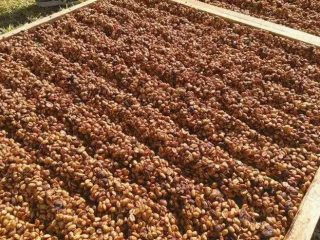
What's the relationship between honey treatment and semi-sun treatment? What is the reason for the invention of semi-solarization.
The first use of honey treatment in Costa Rica, El Salvador and other Central and South American countries, its invention inspired by Brazil's semi-sun method (peeling sun). Brazil's semi-solarization came into being because Brazil's green beans were treated mainly by traditional solarization, and its quality was better than Africa's elevated solarization at the same time.

How to make a popular cup of coffee? Salty bacon coffee / salt soda pot bar coffee / cucumber coffee
In the context of coffee brand giants seeking change, the entry of new players, and the increasing favor of capital and the competition of Internet giants for new retail positions, the coffee market still faces many uncertainties. Whether new players can gain a foothold, a popular style product is very important. If you want to compete well, there are three business models to attract customers to make products: first, flow, second retention, and third merchants.

Which stages does the shelf life of roasted coffee beans go through and what should be paid attention to?
The shelf life of roasted coffee beans is divided into three different stages, namely, taste period, shelf life and shelf life. Taste period, within one to three weeks after baking, the specific time has a lot to do with the baking heat. This period is the best retention period for the personality and flavor of coffee beans, during which all the coffee produced by grinding is of high quality. Fresh-keeping period, within two months after baking, during fresh-keeping period after taste period

Detailed analysis of low molecular weight sugars in coffee beans
Moisture: the water content of coffee beans varies greatly with different processing stages and products. The moisture content of wet coffee beans with film is about 50%, while that of dried raw coffee beans is about 10%-13%. The water content of roasted coffee beans is only less than 5%. The existence of water in coffee beans is the same as other kinds of food and beverages, because it contains a considerable amount of hydration colloid macromolecules.

Processing methods of low caffeine coffee beans
At present, there are three ways to remove caffeine from coffee beans: 1. Water treatment can remove 9496% of the caffeine. 2. Chemical extraction method, early use chloroform (Chloroform), benzene (Benzene) as solvent to extract caffeine, later understand that these chemicals cause cancer, and gradually be replaced by other low-hazard chemicals, but after all, the chemical substances are not natural enough, this method can extract 9.

Detailed Analysis of Coffee Bean ingredients basic knowledge of Fine Coffee
Moisture: the water content of coffee beans varies greatly with different processing stages and products. The moisture content of wet coffee beans with film is about 50%, while that of dried raw coffee beans is about 10%-13%. The water content of roasted coffee beans is only less than 5%. The existence of water in coffee beans is the same as other kinds of food and beverages, because it contains a considerable amount of hydration colloid macromolecules.

Processing methods of coffee beans with low caffeine
CO2 low-caffeine treatment and other low-caffeine treatments are described as follows: at present, there are three ways to remove caffeine from coffee beans: 1. Water treatment can remove 9496% of the caffeine. 2. Chemical extraction method, early use of chloroform (Chloroform) and benzene (Benzene) as solvents to extract caffeine, and later understand that these chemicals cause cancer, and then gradually become other low-hazard chemicals.

Decaffein, the processing method of low caffeine coffee beans
CO2 low-caffeine treatment and other low-caffeine treatments are described as follows: at present, there are three ways to remove caffeine from coffee beans: 1. Water treatment can remove 9496% of the caffeine. 2. Chemical extraction method, early use of chloroform (Chloroform) and benzene (Benzene) as solvents to extract caffeine, and later understand that these chemicals cause cancer, and then gradually become other low-hazard chemicals.
Decaffein, the processing method of low caffeine coffee beans
CO2 low-caffeine treatment and other low-caffeine treatments are described as follows: at present, there are three ways to remove caffeine from coffee beans: 1. Water treatment can remove 9496% of the caffeine. 2. Chemical extraction method, early use of chloroform (Chloroform) and benzene (Benzene) as solvents to extract caffeine, and later understand that these chemicals cause cancer, and then gradually become other low-hazard chemicals.

Hope that the champion of the manor coffee world, Manor Rose Summer Coffee
Boutique coffee is good coffee and is harmless to health. Different from coffee made with low-quality coffee beans, high-quality coffee uses high-quality coffee beans and freshly made coffee, which is harmless to health, and drinking in moderation is beneficial to the body and mind. Boutique coffee has a rich and beautiful taste. Even if the coffee made from fine coffee beans is not all fine coffee, it depends on whether it is brought into full play.

Introduction to the Manor of Panamanian Fine Coffee-- Hope Manor Panamanian Coffee
Hope Manor [country]: Panama [production area]: SHB [Variety]: Katula, Katuai, Iron pickup [baking]: CITY+ (moderate) [treatment]: washing [planting Environment]: altitude 1400-1600m [producer / Company]: hope Manor Hacienda La Esperanza [Certification]: organic certification [taste and flavor]

Panamanian Boquet Hope Manor
Hope Manor [country]: Panama [production area]: SHB [Variety]: Katula, Katuai, Iron pickup [baking]: CITY+ (moderate) [treatment]: washing [planting Environment]: altitude 1400-1600m [producer / Company]: hope Manor Hacienda La Esperanza [Certification]: organic certification [taste style]

Organic certified coffee manor hope manor coffee boutique coffee coffee network
Hope Manor [country]: Panama [production area]: SHB [Variety]: Katula, Katuai, Iron pickup [baking]: CITY+ (moderate) [treatment]: washing [planting Environment]: altitude 1400-1600m [producer / Company]: hope Manor Hacienda La Esperanza [Certification]: organic certification [taste style]
Detailed analysis of mineral carbohydrates in coffee beans
Moisture: the water content of coffee beans varies greatly with different processing stages and products. The moisture content of wet coffee beans with film is about 50%, while that of dried raw coffee beans is about 10%-13%. The water content of roasted coffee beans is only less than 5%. The existence of water in coffee beans is the same as other kinds of food and beverages, because it contains a considerable amount of hydration colloid macromolecules.

Hope that the champion of the manor coffee world, manor rosy summer coffee, American coffee.
Hope Manor [country]: Panama [production area]: SHB [Variety]: Katula, Katuai, Iron pickup [baking]: CITY+ (moderate) [treatment]: washing [planting Environment]: altitude 1400-1600m [producer / Company]: hope Manor Hacienda La Esperanza [Certification]: organic certification [taste style]

Hope Manor Hacienda La Esperanza organic certification is the most famous is the rose summer seed
Hope Manor [country]: Panama [production area]: SHB [Variety]: Katula, Katuai, Iron pickup [baking]: CITY+ (moderate) [treatment]: washing [planting Environment]: altitude 1400-1600m [producer / Company]: hope Manor Hacienda La Esperanza [Certification]: organic certification [taste style]

Introduction to Panamanian Coffee Manor-Hope Manor Pokuit Coffee Coffee area Catura Coffee Card
[country]: Panama [production area]: Pokuit [rating]: SHB [Variety]: Katula, Katuai, Iron pickup [baking]: CITY+ (moderate) [treatment]: washing [planting environment]: altitude 1400-1600m [producer / company]: hope Manor Hacienda La Esperanza [Certification]: organic certification [taste and flavor]: this one has

Hope Manor is located at 1400-1600 meters above sea level, the famous Rosa Variety Manor.
Production area]: Pokuit [grading]: SHB [Variety]: Katula, Katuai, Iron pickup [baking]: CITY+ (moderate) [treatment]: washing [planting environment]: altitude 1400-1600m [producer / company]: hope Manor Hacienda La Esperanza [certification]: organic certification [taste and flavor]: this organic Pokuit, dry and wet fragrance